
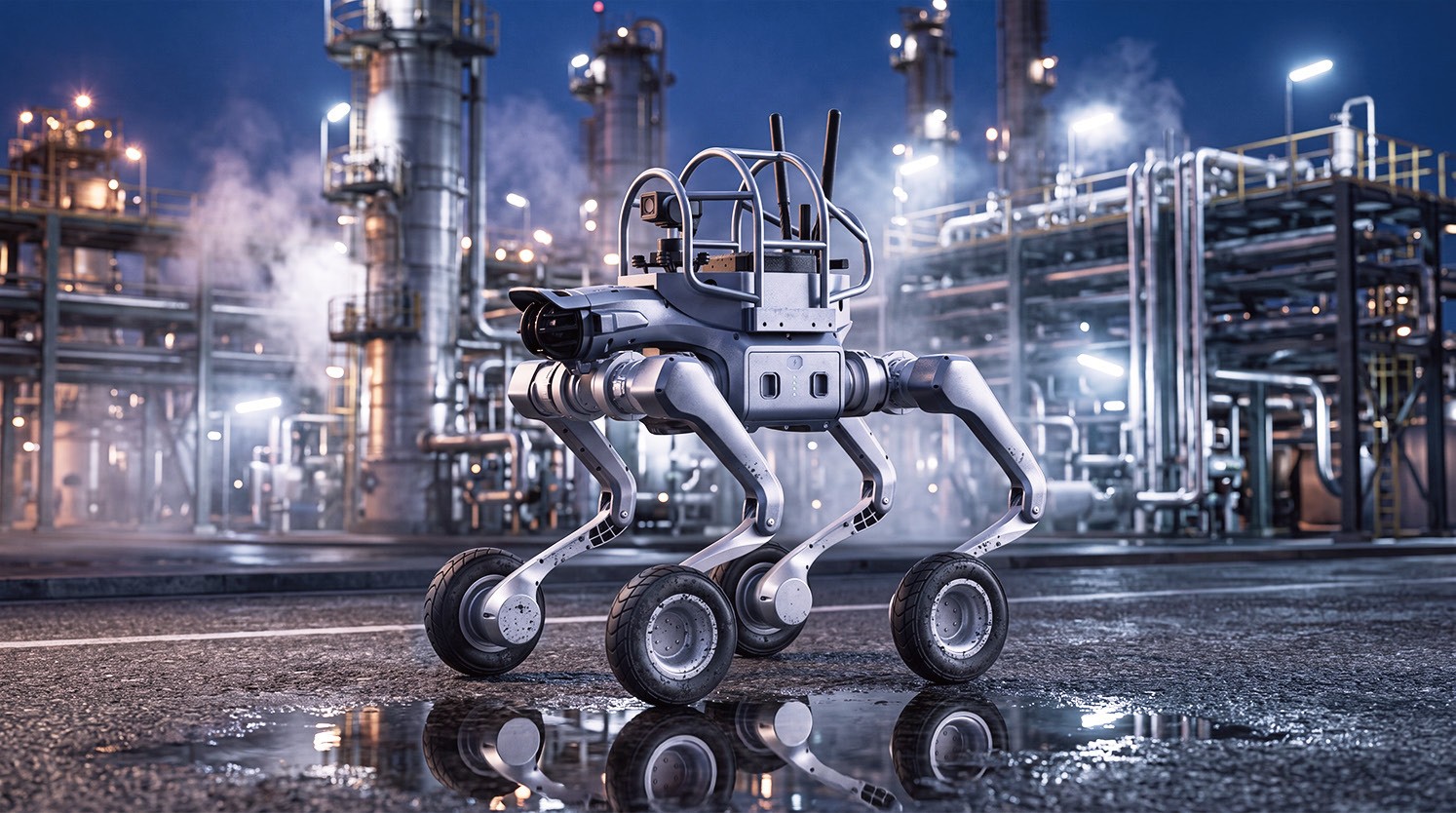
QUADRUPED ROBOTICS · INDUSTRIAL INSPECTION
FOUR LEGS. ONE MISSION.
SAFER INSPECTION.
Intelligent quadruped inspection solutions for power, energy, urban infrastructure, transport and water facilities. Bring mobile sensing closer to demanding environments.
Terrain mobility
Autonomous inspection
AI visual analysis
CORE CAPABILITIES
Intelligent quadruped inspection
Terrain-adaptive mobility and integrated sensing help teams inspect complex locations while reducing personnel exposure.
Built around demanding sites
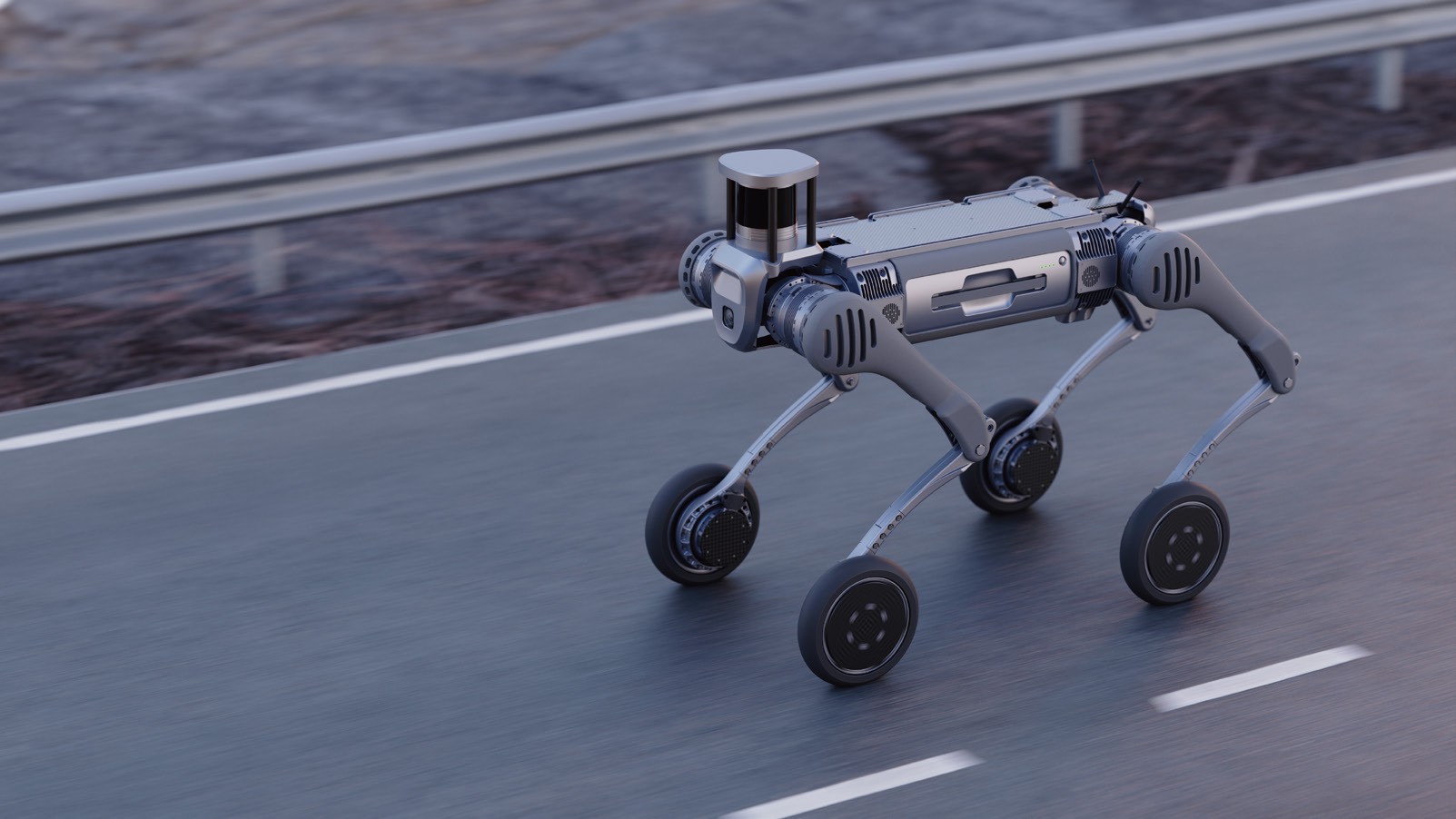
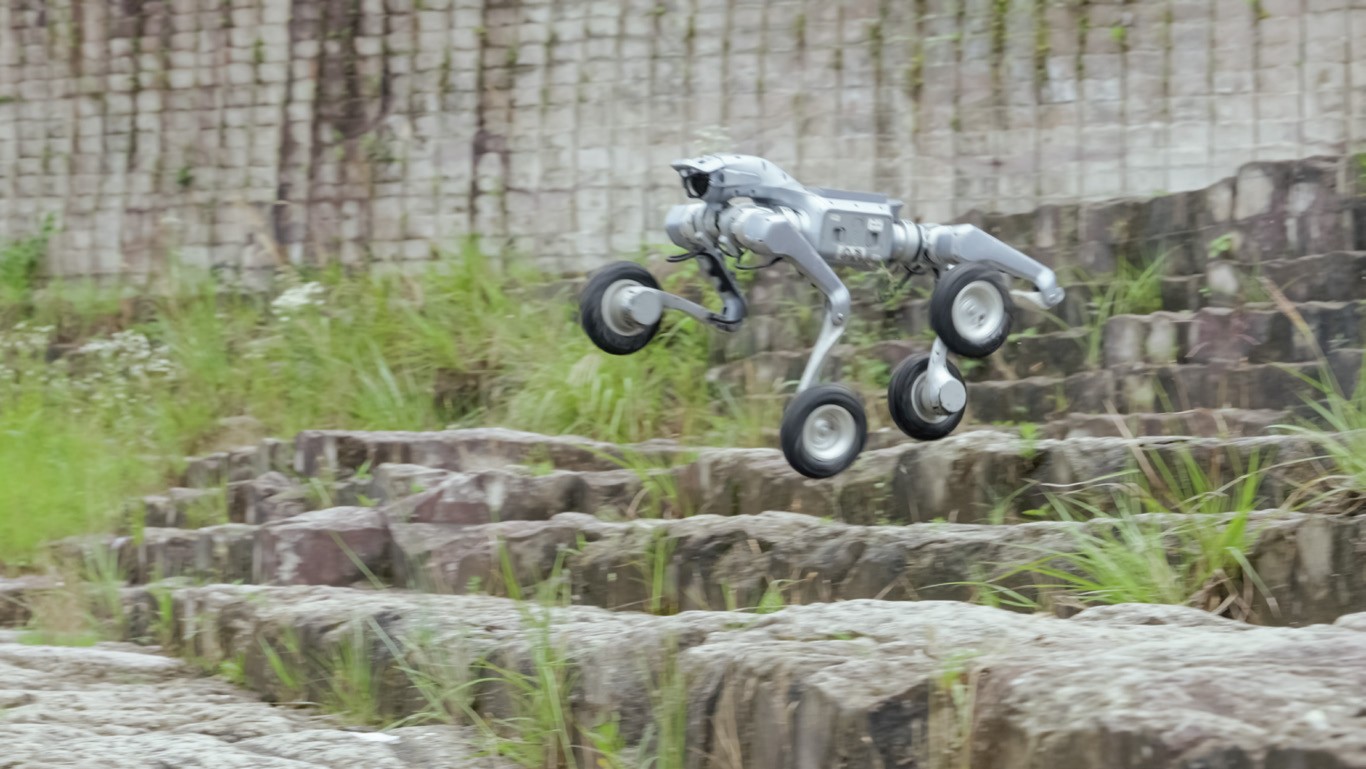
A four-legged platform can support inspection routes across stairs, obstacles and uneven ground. Assess each route and robot configuration for substations, utility tunnels and other locations that are difficult for wheeled platforms to reach.
- Terrain mobility: assess slopes, obstacles and ground conditions for each site
- Sensor integration: combine visual, lidar and thermal data for equipment observation
- Autonomous inspection: mapping, route planning and scheduled inspection workflows
- Emergency support: remote observation to help reduce personnel exposure
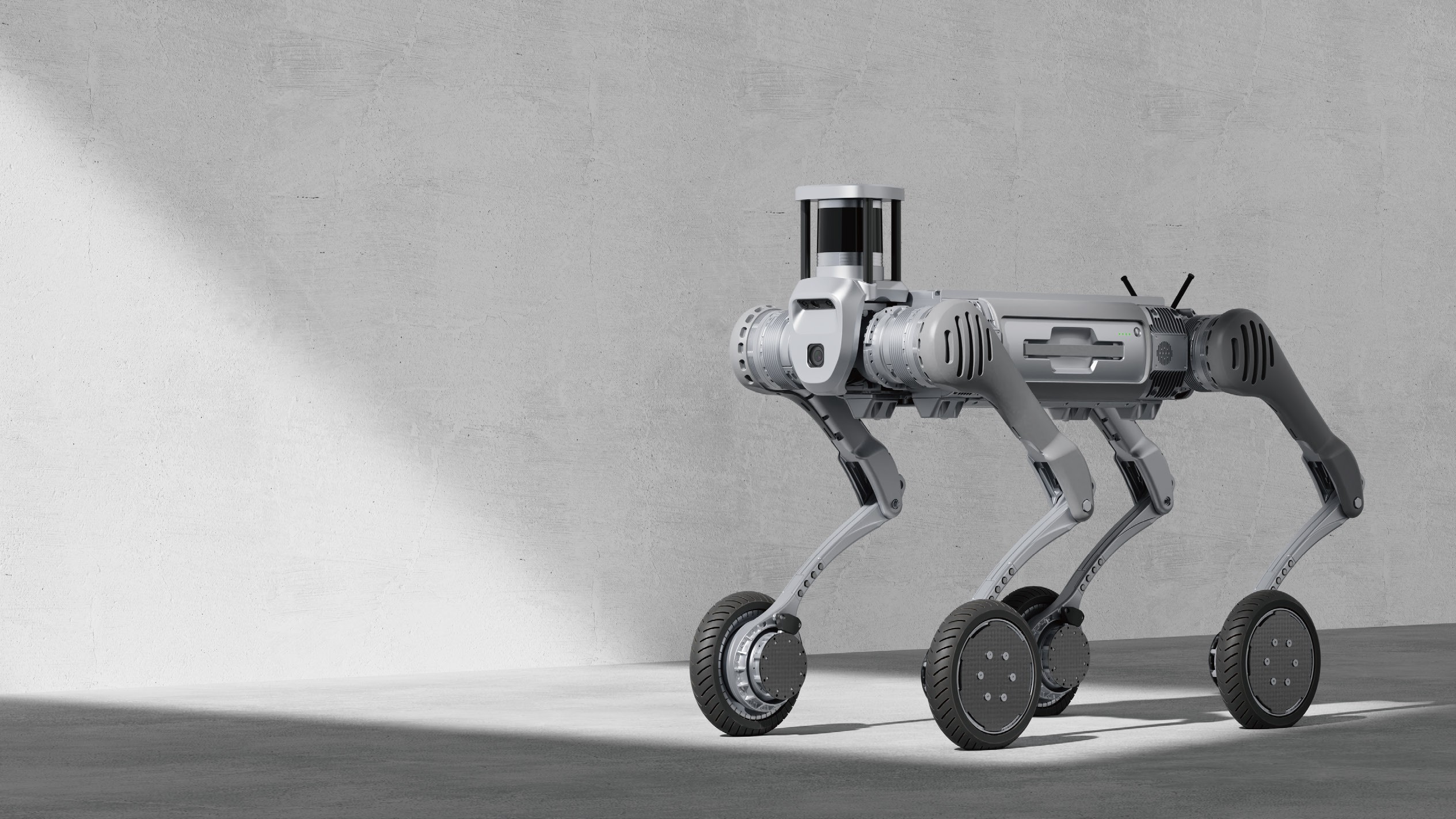
A complete inspection workflow, from mobility to sensing
Terrain mobility
Assess stairs, trenches, loose ground and pipe routes. Define travel limits and operator takeover points.
Multi-sensor observation
Plan visual, thermal, lidar and task-specific sensing, with clear review and recording steps.
Environmental suitability
Verify protection and certification against temperature, humidity, dust and hazardous-area requirements.
Task continuity
Plan charging and task rotations around route length, payload and inspection frequency.
Robot motion demonstration
APPLICATIONS
Inspection across industries
Explore mobile inspection workflows for energy facilities, urban utility tunnels and infrastructure maintenance.
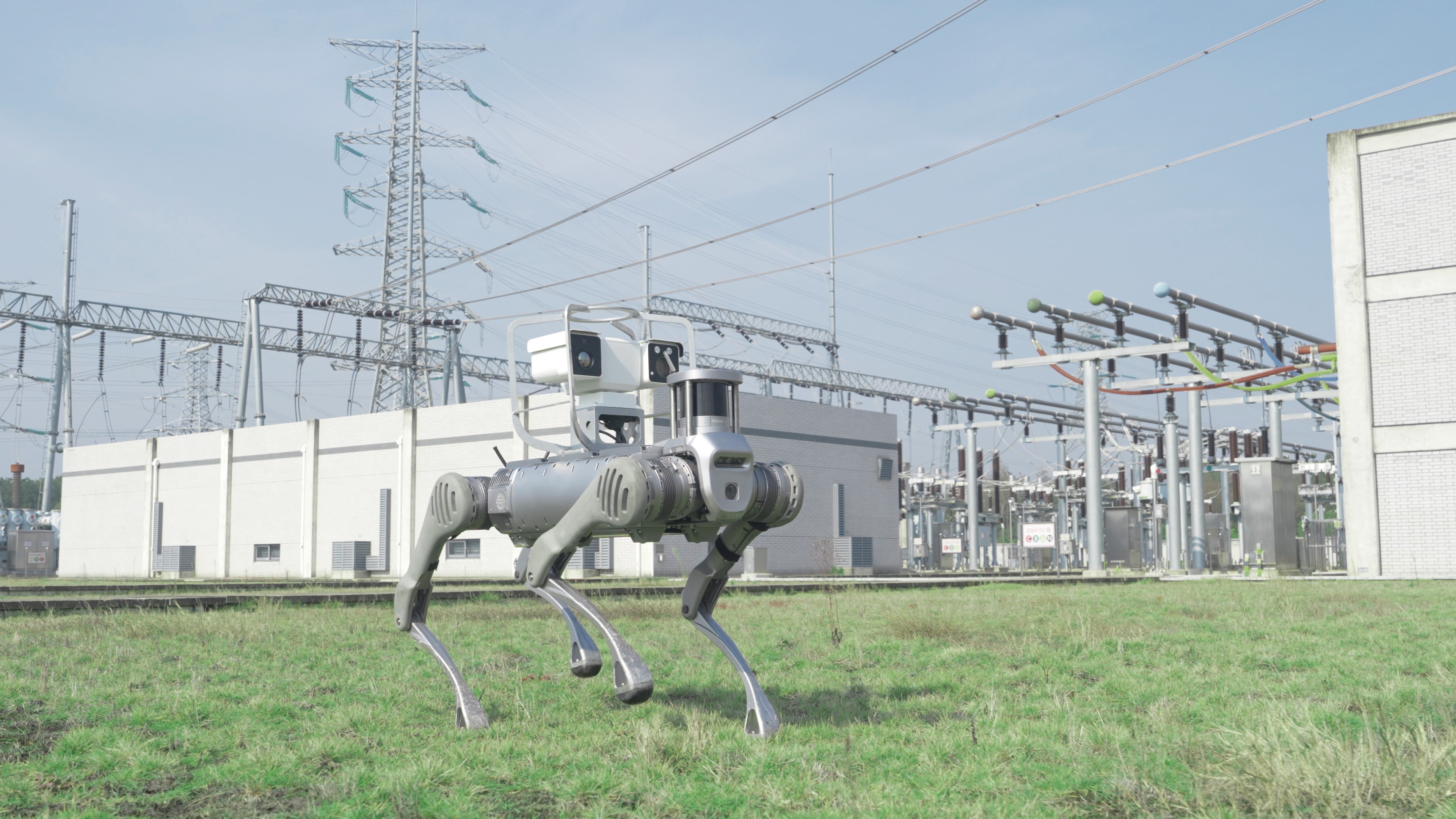
Power & energy
For substation inspection, define the gauges, indicator lights and thermal observation points along the route. Select the robot platform and sensor payload around access, viewing distance and site conditions. Power plants and energy storage facilities require their own inspection-point and route assessment.
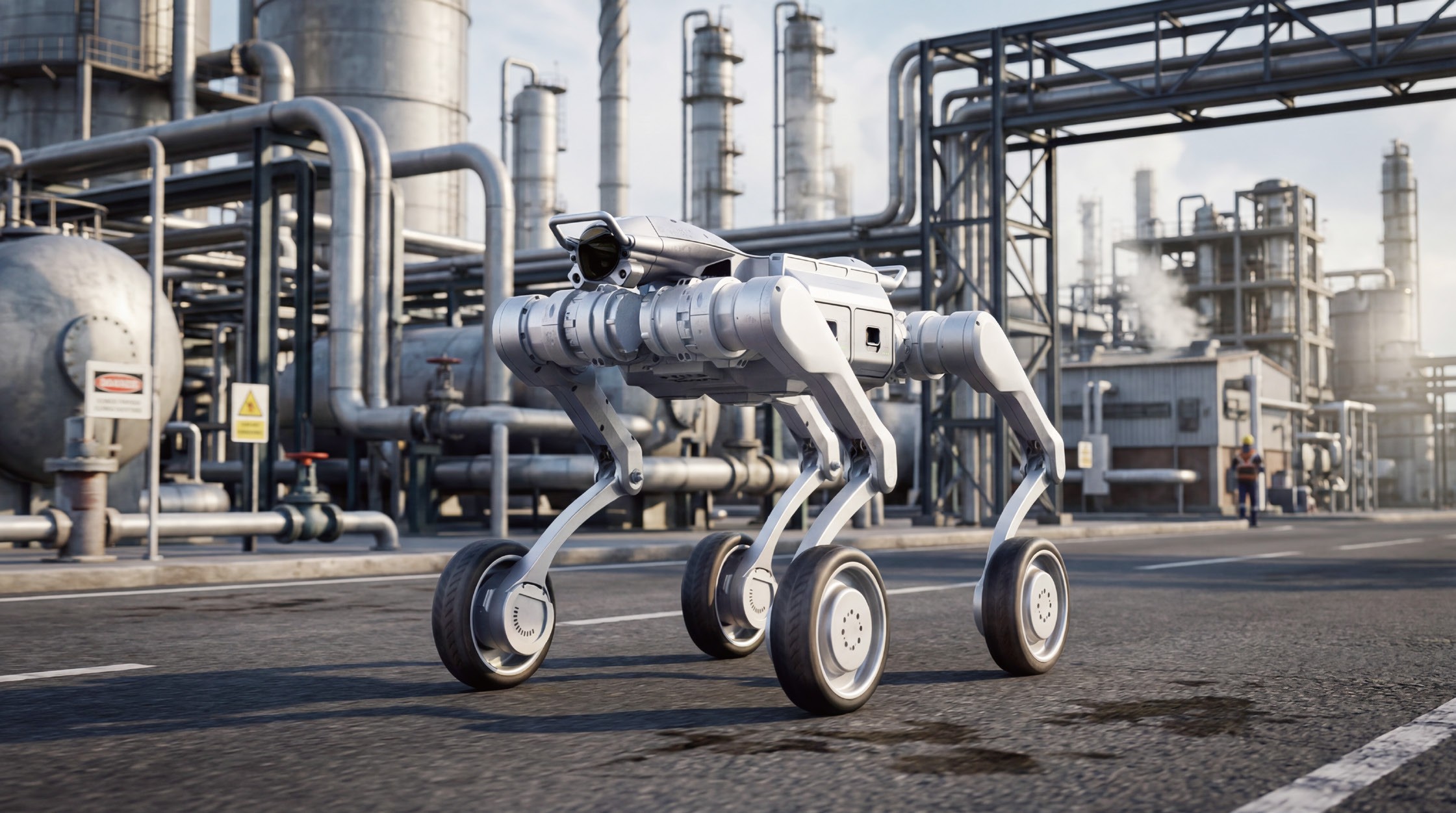
Urban infrastructure
Routine inspection and condition observation for utility tunnels, service corridors and municipal facilities.
Transport & water
Close-range observation and inspection planning for tunnels, rail infrastructure, water treatment plants and pumping stations.
SPECIFICATIONS
Specifications for informed selection
Review mobility, payload and operating time against the requirements of your inspection site.
≥40kg
Continuous payload
40cm
Obstacle clearance
45°
Climbing angle
25cm
Step height
≤3m/s
Cruising speed
4–6h
Operating time
| Performance metric | Reference value |
|---|---|
| Continuous payload | ≥ 40 kg |
| Obstacle clearance | 40 cm |
| Climbing angle | 45° |
| Stair climbing | 25 cm steps |
| Cruising speed | ≤ 3 m/s |
| Operating time | 4–6 h |
INSPECTION PLATFORM
Connected data. Clearer decisions.
Organize inspection data around collection, analysis, alerts and follow-up. Confirm connectivity and analytics functions against the selected system configuration.
- Mapping, route planning and inspection task scheduling
- Meter reading, thermal observation and equipment condition analysis
- Alert and work-order workflows with traceable records
- Visual dashboards for reviewing inspection information
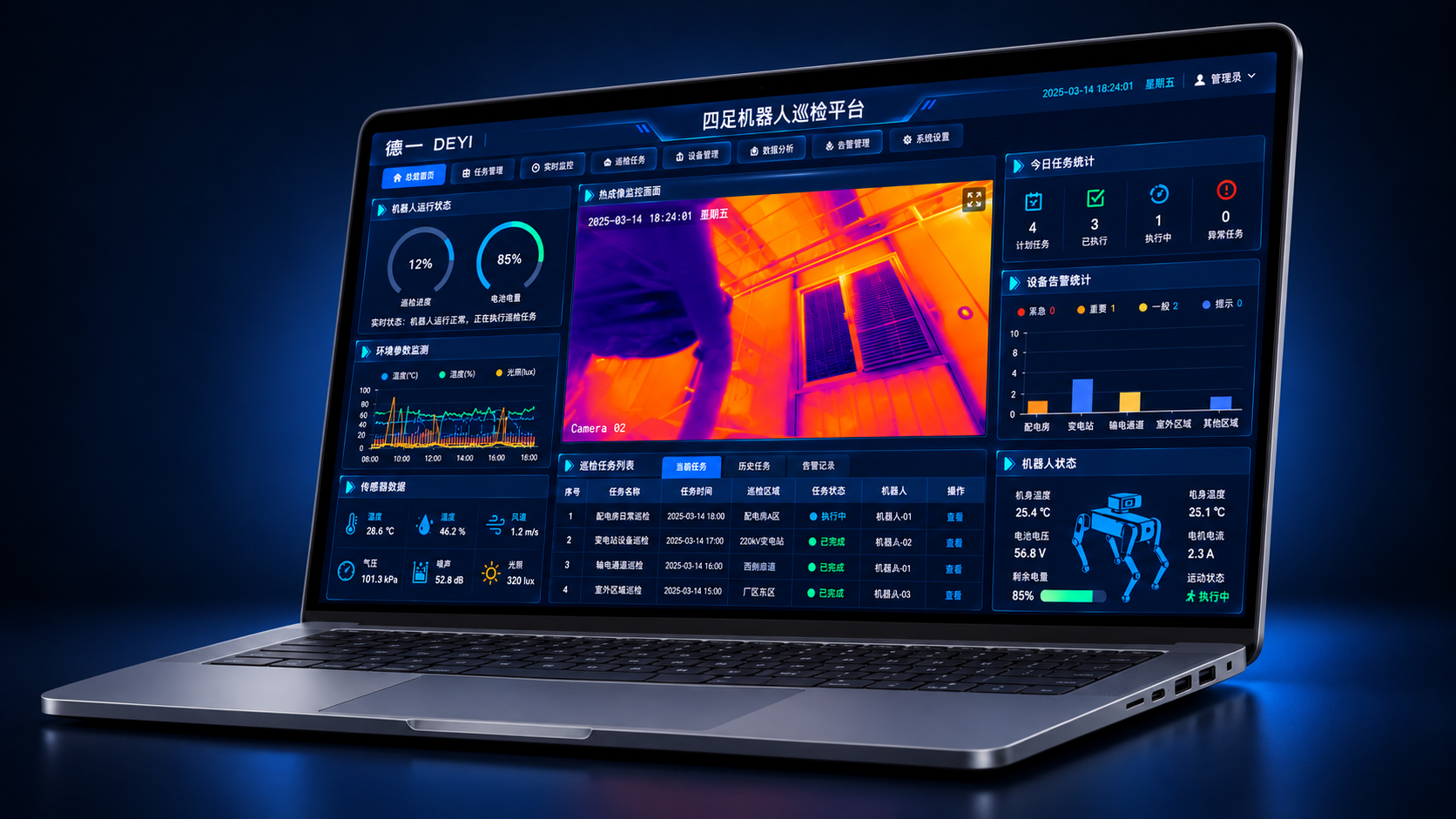
Four connected layers of an inspection system
Digital site mapping
Connect equipment, inspection points and spatial information to review coverage.
Route and task planning
Organize inspections around priorities, site constraints and operator intervention.
Analysis and human review
Combine algorithm outputs with operator judgment to evaluate anomalies.
Combined recognition methods
Select methods for instruments, temperature and equipment condition, then validate results.
DEPLOYMENT
A clear path from planning to deployment
Plan configuration, commissioning and site validation together to establish a practical inspection workflow.
- Charging arrangements planned around the inspection schedule
- Task-specific configuration and sensor payload options
- Discuss operator training, handover and support requirements
Define deployment from integration to acceptance
Interfaces and protocols
Document data formats and integration requirements across devices and business systems.
Inspection point setup
Define equipment lists, observation positions and capture conditions.
Dynamic task execution
Plan route changes, retries, obstacle handling and operator takeover.
Meter-reading validation
Check the effects of scale, angle, light and distortion on readings.
Delivery and acceptance
Complete installation, configuration, commissioning, trial operation and acceptance records.
WHY QUADRUPED INSPECTION
Bring mobility to your inspection workflow
Combine robotics with site knowledge to plan effective inspection tasks.
01
Mobile
Four-legged mobility offers an approach to navigating uneven industrial terrain.
02
Adaptable
Match environmental requirements and duty cycles to the verified operating limits.
03
Connected
Combine visual analysis and inspection records to support informed decisions.
04
Safety focused
Remote observation can help reduce personnel exposure in demanding locations.
COMPARE ROBOT PLATFORMS
Compare the base platform first, then confirm sensors and inspection software for your project.
| Model | Mobility | Continuous walking payload |
|---|---|---|
| A2 | Legged | ≈25 kg |
| A2-W | Wheeled-legged | ≈25 kg |
| B2 | Legged | >40 kg |
| B2-W | Wheeled-legged | >40 kg |
ABOUT DEYI
DEYI is a Chinese company with more than 40 years of manufacturing experience, based in Longkou, Yantai, Shandong. We supply quadruped robots and related services to international customers. For substation, factory equipment and utility tunnel inspection projects, we help customers select robots, sensor options and software configurations, with installation, training, repair and export transport services. Configuration, delivery and after-sales terms are confirmed for each order.
Selection & configuration
Match equipment to the application, route conditions and inspection tasks.
Delivery & training
Discuss installation, software configuration and operator training for the selected equipment.
After-sales & export
Agree repair support, transport arrangements and service terms for each order.
A practical guide to inspection planning
DEYI is a Chinese company with more than 40 years of manufacturing experience, supplying quadruped robots and related services for industrial inspection. Start with the equipment to inspect, then compare route access, sensor payloads, communication and operator workflows before requesting a configuration and quotation.
Power and industrial facilities
List equipment locations, meter types and thermal observation requirements before selecting visual or thermal payloads. Define working distances, lighting conditions and human review steps to build a testable task list.
Utility tunnels, transport and water
Review passage width, steps, slippery ground, communication gaps and return routes. Verify environmental protection and explosion-protection requirements separately; catalog images do not establish suitability.
Quadruped inspection: frequently asked questions
What is intelligent quadruped inspection?
A quadruped inspection system uses a four-legged mobile platform carrying cameras, thermal imagers or other sensors to observe equipment and record site information along planned routes. Detection tasks, autonomy and operator intervention depend on the actual configuration.
What site information is needed before selection?
Prepare a site plan, inspection point list, route length, stair and slope details, environmental conditions, connectivity coverage, task frequency and integration requirements. These inputs inform the platform, payload, charging and deployment plan.
Can quadruped robots work in every hazardous environment?
No. Verify the actual model's protection rating, explosion-protection certification, temperature range and safety limits, and complete a site risk assessment. Demonstrated mobility does not establish permission to operate in a hazardous area.
How should an inspection solution be evaluated?
Define the observation tasks, coverage, record completeness, human review process, task duration and intervention conditions. Validate these criteria in a site demonstration rather than comparing only hardware specifications.
Are the displayed specifications and images purchasing specifications?
The current page retains reference values and catalog imagery from a design backup. They are not confirmed DEYI product specifications. Purchasing decisions should use verified model documentation, test conditions, configuration lists and agreed contractual terms.
What determines the price of an industrial inspection robot?
The robot model, sensing payload, onboard compute, batteries, charging equipment and software scope affect the quotation. Include your required quantity and destination, and ask for an itemized configuration so proposals can be compared consistently.
How do I choose a quadruped robot for substation inspection?
Provide the inspection-point list, example gauges or thermal targets, route length, stairs, slopes and communication coverage. Compare the platform and sensors against these conditions, and agree how observations and exceptions will be reviewed.
Can an inspection robot climb stairs?
Stair capability depends on the selected model, step geometry, surface, payload and operating conditions. Provide stair dimensions and photographs, compare them with the model documentation and validate the proposed configuration on the actual route.
What should I send when requesting a quotation?
Send the preferred model if known, application, quantity, inspection targets, route conditions and destination country. Specify required sensors and accessories, and ask to confirm delivery, training and warranty terms in writing.
Who supplies the robots presented on this website?
DEYI is a robot dealer based in Longkou, Shandong, China. The product brand shown in the supplied robot catalogs is Unitree. Contact DEYI to confirm the model, included equipment and commercial terms.
How can I confirm robot specifications before ordering?
Review the performance section on this page, then ask DEYI for a written specification and configuration for the exact model: A2, B2 Inspection or B2-W. Confirm the model revision, sensor payload, software scope, test conditions and destination requirements. Reference values are not a substitute for the agreed order configuration.
Which services can DEYI provide?
DEYI is a robot dealer serving international customers. Services include complete robot supply, sensor selection, software configuration, installation, training, repair and export transport. Models and configurations are confirmed in the quotation.
How are delivery and after-sales terms agreed?
Delivery schedules, installation, training, warranty, repair arrangements and shipping terms are confirmed for each order. Request written scope and conditions before placing an order.
What should I specify for a thermal inspection robot?
For a quadruped inspection robot with a thermal camera, describe the equipment, expected temperature range, viewing distance and reporting needs. Confirm camera compatibility, measurement requirements, mounting, software and how personnel will review anomalies before ordering. A thermal camera is an optional configuration, not a standard feature of every model.
How do I plan a utility tunnel inspection robot project?
For utility tunnel inspection, provide passage width, steps, slopes, wet areas, route length and communication coverage. Specify the inspection targets and any gas sensing requirements. Confirm robot dimensions, payload compatibility, recovery procedures and any required hazardous-area certification for the exact configuration.
CONTACT
Discuss your inspection requirements
Contact us by phone or email to discuss your site conditions, inspection tasks and deployment requirements.
Telephone
Business email
Office address
Xinjia Subdistrict, Longkou, Yantai, Shandong, China